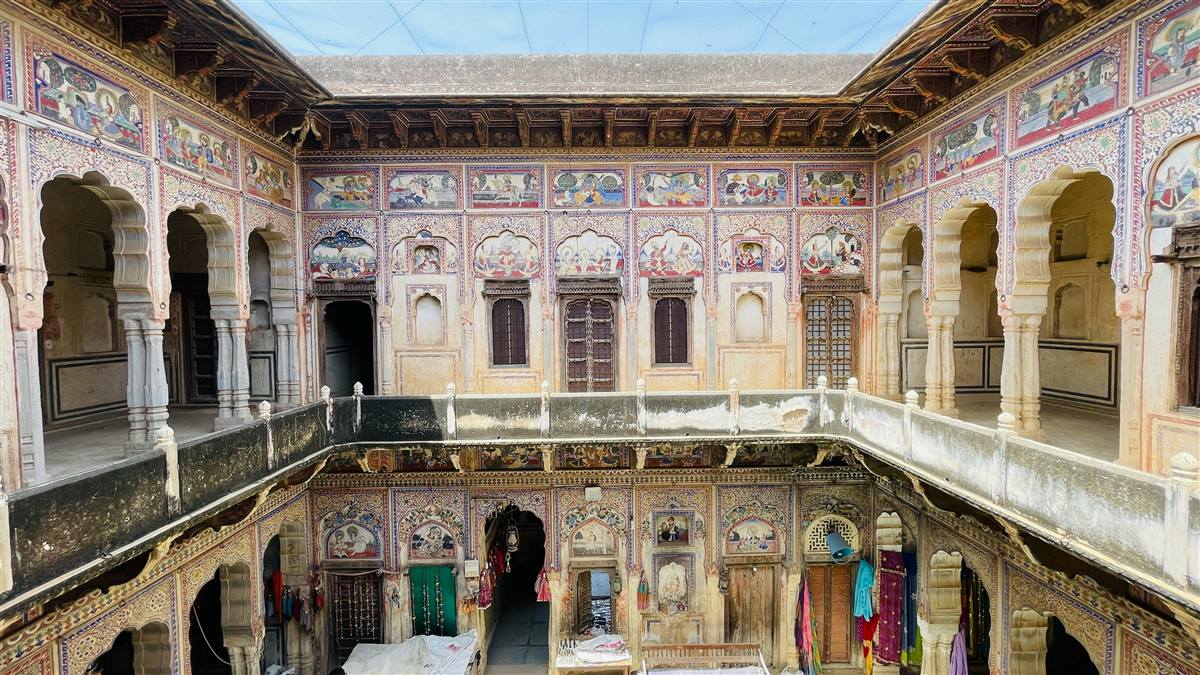
A painted haveli in the Shekhawati region — the world's largest open-air art gallery
I'll be honest—I stumbled into Shekhawati by accident. I was driving from Jaipur to Bikaner, squinting at Google Maps, when I saw a small road branching off toward a town called Mandawa. "Let's just check it out," my friend said. Two hours later, we were standing in front of a 200-year-old haveli, staring up at frescoes of trains, airplanes, and British officers painted on walls that were crumbling beautifully in the desert sun.
That detour turned into four days. And honestly? It should've been longer.
What Even Is Shekhawati?
Shekhawati isn't a single city—it's a region in northeastern Rajasthan that most tourists completely miss. While everyone's crowding into Jaipur's palaces and Udaipur's lakes, this semi-arid stretch of desert sits quietly, home to thousands of painted havelis that are basically an open-air art museum.
Here's the quick history: Back in the 18th and 19th centuries, Marwari merchants from this dusty region went off to make their fortunes in Calcutta and Bombay. When they got rich—and I mean really rich—they came back home and built these insanely ornate mansions to show off their wealth. But here's the cool part: they didn't just slap on some gold paint and call it a day. They hired artists to cover every inch of these havelis with frescoes. We're talking mythology, gods and goddesses, but also trains, cars, telephones, hot air balloons—basically anything new and modern they'd seen in the big cities.
Then... they kind of abandoned them. The families moved to cities for good, the havelis emptied out, and Shekhawati became this gorgeous ghost town of painted walls.
When to Go (Because This Matters A LOT)
October to March. Seriously, don't come in summer. Churu regularly hits 50°C (122°F), and wandering around havelis becomes a form of torture. Winter mornings are perfect—crisp, clear light for photos, and cool enough to actually enjoy walking around.
Getting There
Fly or train to Jaipur (the closest major city), then it's about a 3-4 hour drive to Mandawa, which makes a good base. You can also reach it from Delhi (about 6-7 hours). Rent a car with a driver if you can—the roads are decent, but navigating the narrow lanes of these old towns is an art form.
Mandawa: Start Here
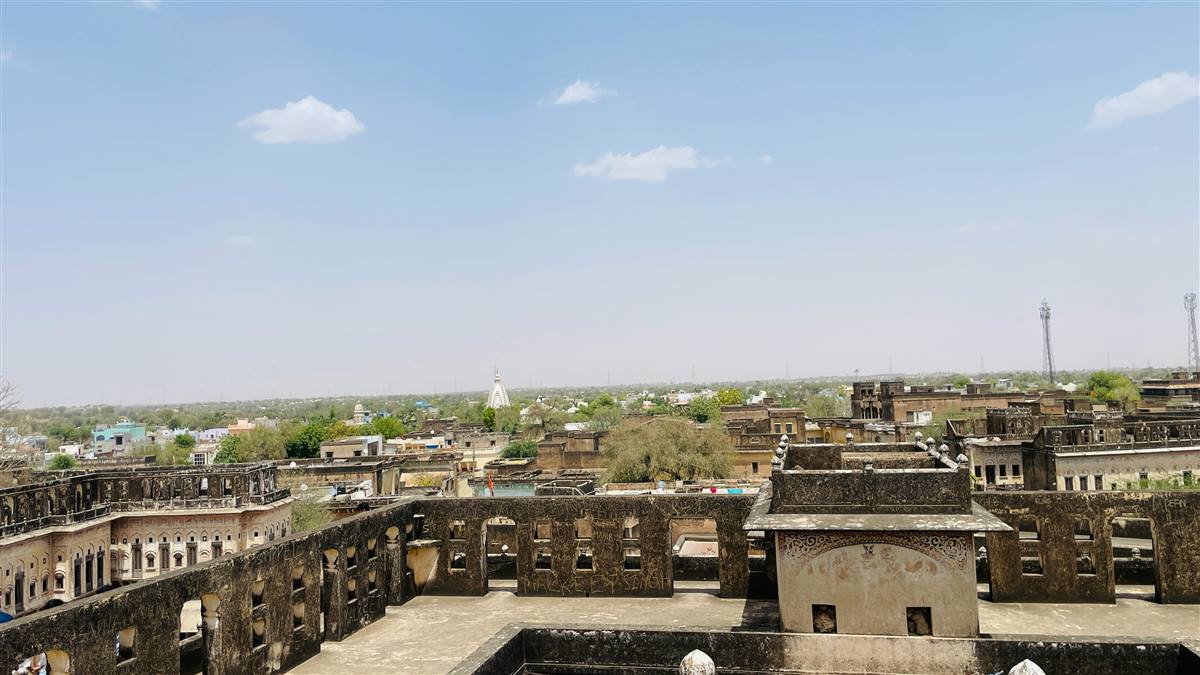
The streets of Mandawa — Shekhawati's poster child
Why come: This is Shekhawati's poster child—the most accessible, with the best infrastructure, and enough stunning havelis to blow your mind on day one.
Mandawa feels like someone pressed pause in 1900. The old bazaar still has that chaotic energy, but turn down any side street and suddenly you're standing in front of these massive wooden doors with paintings of Europeans holding umbrellas and pocket watches.
Don't miss:
- Goenka Double Haveli: Two matching havelis facing each other. The frescoes here are wild—one wall has Lord Krishna, another has a British couple in Victorian dress, and somehow it all works together.
- Murmuria Haveli: Look for the painting of a boy using a telephone. In the 1920s, when this was painted, that was the height of modernity.
- Mandawa Castle: Now a heritage hotel (and yes, you can stay there). Even if you don't book a room, pop in for lunch or tea.
Nawalgarh: The Art Nerd's Paradise
Why come: If Mandawa is Shekhawati 101, Nawalgarh is the advanced course. The frescoes here are more intricate, better preserved, and there's an actual museum.
Don't miss:
- Podar Haveli Museum: Restored haveli with explanations about fresco techniques and pigments.
- Morarka Haveli: The facade alone is worth the visit.
- Aath Havelis Complex: Eight havelis in a row with playful competition between owners.
Fatehpur: Where Europe Crashed Into Rajasthan
Quirky European influences, fewer tourists, and weirdly wonderful frescoes showing Indian gods in Western attire and scenes from European fairy tales.
Alsisar, Mahansar, Sikar, Jhunjhunu, Churu
Each town offers something different: heritage hotels and camel safaris in Alsisar, overwhelming gold-leaf frescoes in Mahansar, practical services in Sikar, pilgrimage energy in Jhunjhunu, and extreme heat and solitude in Churu. Read the full section in the blog for details and tips.
The Practical Stuff You Actually Need to Know
How long to spend: Minimum 2 days (Mandawa + one other town). Ideal is 3-4 days. Getting around is easiest with a rented car and driver (₹2,500—4,000/day).
The Food Situation
Not fine dining, but hearty Rajasthani fare: dal baati churma, ker sangri, gatte ki sabzi, fresh lassi, and roadside chai and samosas.
Why This Place Matters
Shekhawati is fading—natural pigments on lime plaster deteriorate each year. Visit soon to see these frescoes before some are lost forever, and support caretakers and local guides who preserve this heritage.
Most Asked Questions About Shekhawati (Google Search FAQs)
These are common planning questions travelers search before visiting Shekhawati. Use this as a quick checklist before you book your route.
Is Shekhawati worth visiting in Rajasthan?
Yes. If you want heritage beyond Jaipur and Udaipur, Shekhawati offers painted havelis, old merchant towns, and fewer tourist crowds. It is one of the best offbeat places in Rajasthan for culture and architecture lovers.
How many days do you need for Shekhawati?
Plan at least 2 days for Mandawa and Nawalgarh. For a fuller route including Fatehpur and Mahansar, 3 to 4 days is ideal. If this is your first India trip, read our complete Rajasthan guide for foreigners.
What is the best time to visit Shekhawati?
The best months are October to March. Weather is cooler, walking is easier, and fresco photography is better in morning and late afternoon light. Avoid peak summer heat for comfort.
How to reach Shekhawati from Jaipur?
Jaipur to Mandawa usually takes around 3 to 4 hours by road. Hiring a car with a driver is the easiest way to visit multiple haveli towns in one trip.
Is Shekhawati safe for solo and foreign travelers?
In general, yes. Follow standard precautions: daytime sightseeing, trusted transport, and verified hotels. For practical tips, check our Rajasthan safety guide and solo travel guide.
Where should I stay in Shekhawati?
Mandawa is the easiest base for first-time visitors due to better stay options and central location. Heritage stays in Nawalgarh are also a good choice for slower travel. You can compare routes in our Rajasthan itineraries.
Happy travels. Book the car. Pack the sunscreen. Go to Shekhawati.